Protect Escape Routes
Fire Door Inspection In Bristol
Fire door inspection in Bristol looks at the complete doorset and the conditions that affect its performance. We help landlords, managing agents and commercial premises managers identify defects, organise records and understand which findings need repair, further investigation or specialist advice.
Enquire About This Service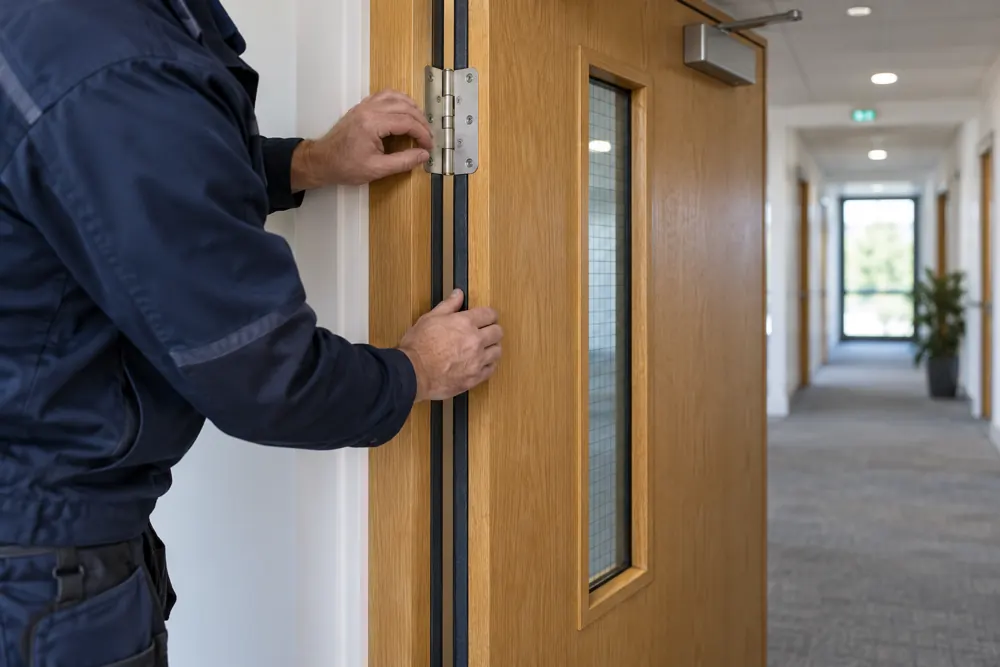
Inspect The Whole Doorset
A fire door is more than the door leaf. The frame, seals, glazing, hinges, closer and other ironmongery all contribute to the doorset’s function. Damage, unsuitable alterations or components that do not work together can affect its ability to protect an escape route.
An inspection should identify the door location and record what can be observed. Available certification and installation information help establish the intended specification. Where evidence is missing, the report should explain the limitation rather than assign a fire resistance rating from appearance alone.
What The Inspection Looks At
Checks typically consider visible condition, how the door closes, the latch where fitted and the condition of relevant seals and hardware. Gaps and clearances need assessment against the doorset’s evidence and appropriate guidance. A single generic gap rule should not replace that judgement.
Alterations for access control, new glazing or replacement hardware deserve attention. The inspection should also consider obstructions and everyday use. A suitable door wedged open or prevented from closing cannot perform its intended protective function when needed.
Residential Checks Have Specific Limits
The Fire Safety (England) Regulations 2022 introduce particular routine checks for multi-occupied residential buildings above 11 metres. Government guidance describes quarterly checks of communal fire doors and best endeavours annual checks of flat entrance doors (Home Office, regulation 10 guidance). These specific intervals should not be presented as a universal rule for every building.
Other maintenance duties still apply, including in buildings below that height where relevant. Routine checks under regulation 10 are not the same as an expert technical assessment of fire resistance. The right inspection scope depends on the premises, existing evidence and concerns identified by the fire risk assessment.
Commercial Premises And Shared Buildings
Fire doors in workplaces form part of the wider fire precautions under the Fire Safety Order. Their inspection and maintenance arrangements should reflect use, condition and risk. A busy corridor door may suffer different wear from a rarely used door in a protected stair.
In shared premises, clarify which doors fall within your control and which belong to the landlord or managing agent. Access to both sides may be needed to inspect properly. Responsibilities should be agreed before the visit so relevant doors are not left outside everyone’s scope.
From Door Register To Action Plan
Begin with a door list or a walkthrough to establish the inspection boundary. Give each doorset a usable reference and record access limitations. The inspection findings should distinguish observed defects from matters that need evidence, opening-up or a separate specialist review.
A useful report connects each recommendation to the right door with photographs or clear descriptions. Repairs should be specified and carried out by competent people using suitable components. Reinspection or other verification may be needed to confirm the completed work addresses the finding.
What Affects Inspection Cost
Door numbers, building layout, access restrictions and the level of reporting affect cost. Doors in leased premises can require appointments with tenants, while large premises may need several access arrangements. Missing information and unusual doorsets can require further investigation beyond a visual inspection.
Ask whether the quotation includes a door register, photographs and a prioritised defect schedule. Repairs and certification of new installations are separate tasks unless stated. Provide the property type, approximate door count and any known concerns when asking for a scope.
Before And After The Visit
Gather existing inspection reports, installation records and available doorset information. Arrange access and explain any security restrictions. Avoid painting over seals or making adjustments simply to prepare for inspection, as the assessor needs to see the real condition.
Once the report arrives, give the actions to the person responsible for arranging work. Retain the repair details against each door reference. Continue reporting damage and closing problems between visits, since an inspection only records the condition at the time it takes place.
Your Questions Answered
Does Every Fire Door Need An Annual Inspection?
Fire door inspection intervals depend on the building and the relevant duties. Specific checks apply to qualifying residential buildings, while other premises need arrangements based on risk and condition. Distinguish routine checks from a technical inspection, and use the fire risk assessment to identify where a more detailed review is necessary.
Can A Damaged Fire Door Be Repaired?
A damaged fire door may be repairable if the proposed work is suitable for that doorset and supported by the relevant evidence. Some defects need replacement components, while others justify replacement of the doorset. An inspection should explain the defect and the next step, without assuming every visible issue has the same remedy.
Further guidance: Read the relevant official or industry guidance. The agreed scope should reflect your premises and the current applicable requirements.
Related Services
Look At The Whole Building.
Start With Your Premises
What Needs Attention In Your Building?
Tell us what you know. We’ll help clarify the next step.