Keep Protection Working
Fire Alarm Maintenance In Bristol
Fire alarm maintenance in Bristol helps keep detection and warning arrangements dependable as buildings and equipment age. We focus on planned inspection, useful service records and clear reporting of faults, so premises managers can distinguish a completed visit from a system that still needs attention.
Enquire About This Service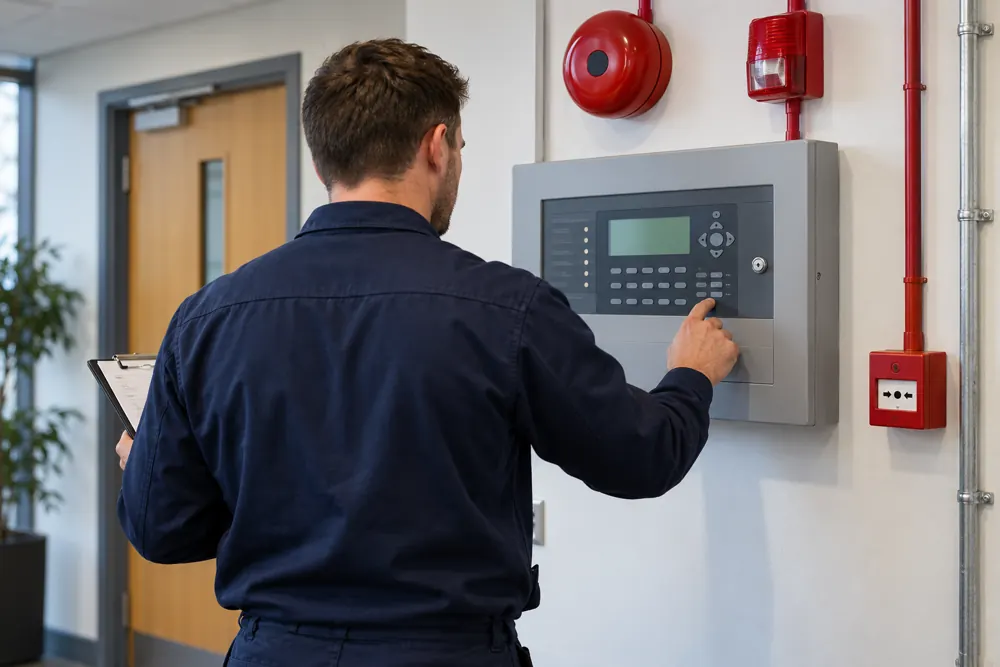
Servicing Is Different From User Testing
Routine user checks help identify obvious problems between service visits. Professional inspection and servicing involve a wider assessment of the system’s condition and operation. One does not replace the other, and both need clear ownership within your fire safety arrangements.
A working indicator at the panel cannot confirm that all detectors, warning devices and connected functions are suitable and operational. Dust, damage, alterations and changes in use can affect performance. A maintenance visit should consider those conditions as well as the equipment itself.
A Suitable Maintenance Scope
The service scope should identify the panel, devices, power supplies and interfaces included. Existing records, previous defects and the building’s use help the engineer plan the work. Access to locked rooms, ceiling spaces or tenant areas needs arranging before the visit.
Tell us about repeated unwanted alarms, intermittent faults or parts of the building where warnings are difficult to hear. A fault history is useful even if the system appears normal on the day. Photographs of the panel and existing service information can help establish compatibility before a quotation.
Standards And Management Duties
BS 5839-1:2025 covers maintenance alongside the design, installation and commissioning of non-domestic fire alarm systems. The Fire Safety Order requires relevant fire safety measures to be maintained. The maintenance arrangement should suit the system and the risks, with the basis for the schedule made clear.
Service records should identify the work carried out, limitations and outstanding defects. A visit should not be described as resolving issues that were outside its scope. Keep the findings with the fire safety records so the responsible person can arrange follow-up work and track completion.
What Happens During A Visit
Before testing, agree arrangements with the premises contact and any monitoring provider. The engineer reviews the logbook and known issues, then carries out the agreed inspection and functional tests. Testing that could operate connected equipment needs coordination with those responsible for it.
Afterwards, the system needs to be returned to its intended operating condition and the relevant people informed. The report should distinguish work completed, observations and defects requiring action. Ask for a clear explanation of anything that could affect protection rather than relying on a ticked service sheet.
Faults And Unwanted Alarms
Unwanted alarms can be associated with unsuitable detector locations, environmental changes, contamination or equipment faults. Finding the cause means looking at the pattern and conditions, not simply resetting the panel. Record when events happen, where they originate and what was happening nearby.
Do not disable protection to stop an irritating signal. Follow your premises procedures and obtain competent advice where a fault affects the system. This website enquiry form is for planned work and should not be used as an emergency fault reporting channel.
What Affects Maintenance Cost
Device numbers, panel type, site access, connected equipment and the condition of existing records influence cost. A larger site may require a different visit pattern from a small, straightforward installation. Fault investigation, replacement parts and remedial work may need a separate quotation.
Ask what the planned service includes and how additional work is authorised. Clarify whether any remote monitoring, call-out arrangement or specialist interface testing is part of the contract. No emergency attendance arrangement should be assumed unless it is explicitly agreed with the contractor.
Preparing Your Site And Records
Have the current logbook, certificates and previous reports available. Arrange keys and access permissions, and inform staff about planned audible testing. If the building is shared, coordinate with the managing agent and neighbouring occupiers before tests affect common systems.
After a service, assign each follow-up action to someone who can arrange it. Retain repair evidence and update the fault history when a problem is resolved. That continuity helps the next engineer understand the system and prevents the same unresolved issue being rediscovered at each visit.
Your Questions Answered
Does A Weekly Alarm Test Replace Servicing?
A routine fire alarm test does not replace professional inspection and servicing. User checks provide a limited operational check, while servicing examines the system more widely against its maintenance requirements. Keep both types of records and agree the user testing procedure with the competent organisation responsible for your particular installation.
Can You Maintain An Existing Alarm?
Maintenance of an existing fire alarm depends on the equipment, access and available technical information. Share the panel make, any fault messages and previous service records so compatibility can be checked. Some systems require manufacturer-specific tools or support, and those restrictions should be identified before a maintenance arrangement is agreed.
Further guidance: Read the relevant official or industry guidance. The agreed scope should reflect your premises and the current applicable requirements.
Related Services
Look At The Whole Building.
Start With Your Premises
What Needs Attention In Your Building?
Tell us what you know. We’ll help clarify the next step.